
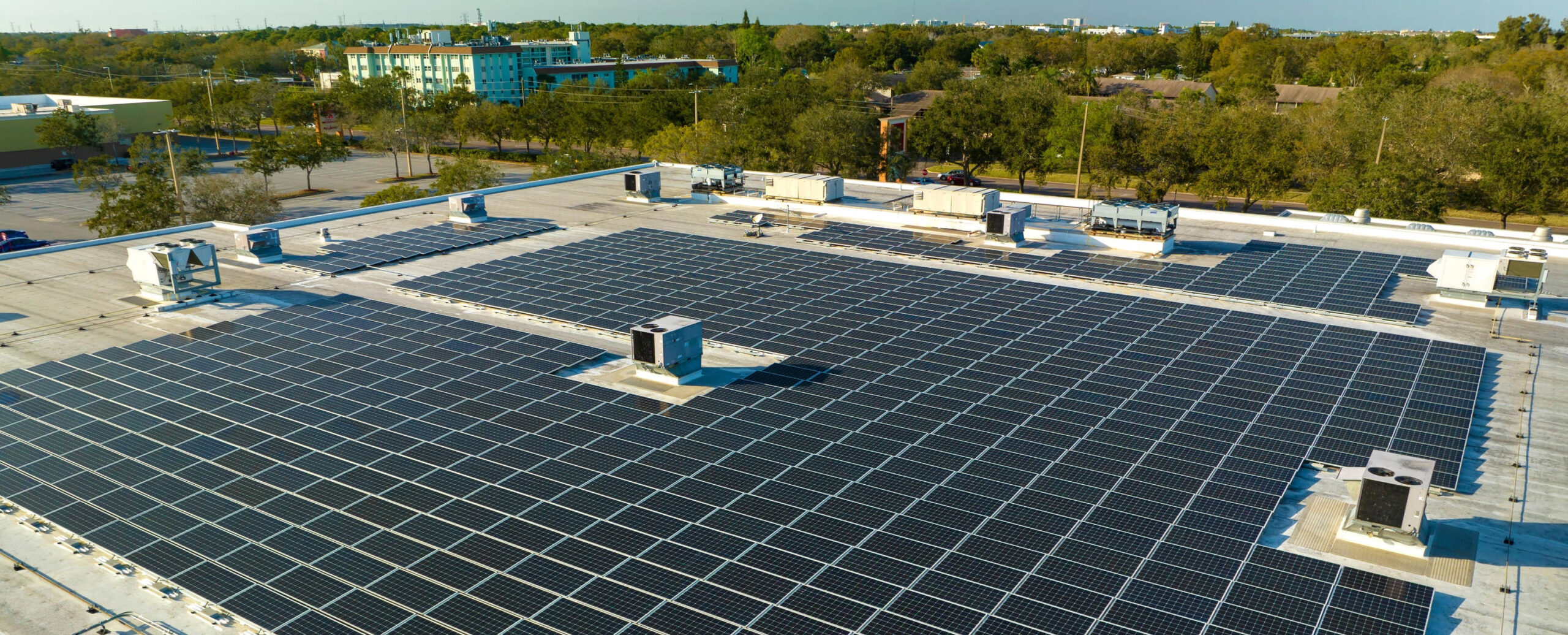
Self-Consumption / Net Billing
System Categories and Types – Which Solution Is Right for You?
In an era where the need for green energy is becoming an increasingly clear priority for both households and businesses, the transition to renewable energy is no longer optional—it is a one-way path. Photovoltaic systems, widely known and trusted, remain one of the most efficient and popular sustainable solutions, fundamentally reshaping how energy consumers operate.
We have now moved from the era of Net Metering to that of Net Billing, meaning real-time self-consumption with the sale of surplus energy. Through Net Billing, households and businesses can generate the energy they consume, achieving greater energy autonomy.
Let’s explore what Net Billing is, why it is worth investing in with MGD Energy—the No.1 self-consumption company in Greece, and the different system categories and options available based on your needs and data.
What Is Net Billing?
With the abolition of Net Metering (Energy Offsetting), Net Billing (Simultaneous Offsetting) is the new regulatory framework for energy self-consumption.
Under Net Billing:
- Energy produced by the photovoltaic system is used immediately for self-consumption (in real time).
- Any surplus energy that is not consumed at the time of production is sold to the grid, with financial compensation based on the wholesale electricity price at the time of injection.
- When photovoltaic production is insufficient to cover consumption, energy is drawn from the grid and charged by the electricity supplier based on the applicable energy price at that time.
Net Billing operates using a bi-directional (dual-flow) meter, where the monthly electricity bill reflects:
- the cost of energy consumed from the grid, and
- the value of energy produced by your photovoltaic system.
Compensation is calculated based on the System Marginal Price (SMP), determined by wholesale electricity markets.
As a result, Net Billing offers immediate financial relief and is a smart choice for those investing in photovoltaics to directly benefit from solar energy and significantly reduce energy costs.
Virtual Net Billing
Self-producers can also take advantage of Virtual Net Billing, which applies Net Billing to remote installations, where the photovoltaic system is not located at the same site as the consumption point (provided they are within the same electrical zone).
Virtual Net Billing allows:
- multiple consumption points under the same tax ID,
- centralized energy offsetting with a single PV system,
- flexibility for businesses, institutions, and energy communities
When Is Virtual Net Billing the Right Solution?
Virtual Net Billing is particularly suitable when:
- there is no available space for PV installation at the consumption site,
- municipalities, public bodies, and enterprises operate multiple facilities and seek centralized energy offsetting,
- centralized control and optimization are required (e.g. universities, industrial parks),
- it is used as the primary model for Energy Communities made up of citizens, farmers, or businesses.
What Are Zero Feed-in Photovoltaic Systems and When Are They the Best Choice?
Zero Feed-in (No Grid Injection Systems)
Zero Feed-in is a Net Billing configuration where no energy is allowed to be injected into the grid. All generated energy is either:
- consumed on-site, or
- stored in batteries.
In Zero Feed-in installations:
- the PV system is sized so that production never exceeds consumption,
- surplus energy is either stored (if batteries are installed) or curtailed by the inverter,
- the grid meter records no energy injection.
Zero Feed-in Is the Optimal Choice When:
- grid injection is prohibited due to network congestion or thermal limits,
- consumption will remain consistently higher than production throughout the system’s lifespan (20 years),
- simplified and faster licensing procedures are required.
Net Billing System Categories
Commercial / Industrial Systems
For businesses, offices, workshops, hotels, etc., Net Billing PV systems can be installed up to 100% of the contracted supply capacity.
Main objective:
Energy autonomy with financial utilization of surplus energy, while strengthening ESG performance and sustainability.
Residential Systems
Net Billing PV systems are allowed up to 10.8 kWp.
Main objective:
Reduction of electricity costs.
Apartment Buildings (Shared Supply)
Net Billing PV systems are allowed up to 100% of the contracted supply capacity, including Virtual Net Billing options.
Main objective:
Reduction of electricity costs.
Collective Self-Consumption (Same Building)
Net Billing systems can be installed up to 100% of the total contracted capacity of all consumption points within the same building.
- At least two self-consumers in the same building may participate with owner consent.
- Example: apartment owners install a PV system on a shared rooftop and share the energy produced.
Main objective:
Reduction of electricity costs.
Citizen Energy Communities
Under Law 5037/2023, Energy Communities now primarily serve member needs through self-consumption via Virtual Net Billing.
Minimum number of members:
- 30 members,
- 20 members for island municipalities under 3,100 inhabitants,
- 15 members if at least 15 SMEs participate,
- 3 members if one is a local authority (OTA).
PV plants may be installed in any region, regardless of where consumption facilities or headquarters are located.
Main objective:
Reduction of electricity costs.
Agricultural Systems
Agricultural facilities, pumping stations, and greenhouses may benefit from subsidy programs aligned with irrigation and seasonal consumption needs.
Main objective:
Reduction of electricity costs.
Public & Community Infrastructure
Schools, hospitals, municipal buildings, and public facilities aiming to reduce public operating expenses.
The Importance of Net Billing in the Energy Transition
Net Billing is a key driver in accelerating the energy transition by providing a stable and predictable framework for self-producers—both individuals and businesses. It encourages the installation of new photovoltaic systems, reduces reliance on fossil fuels, enhances energy autonomy, and transforms consumers into active energy producers, easing pressure on the central grid and optimizing local energy use.
Discover Our 300+ Projects Across Greece
Explore our full Net Billing portfolio and see how MGD Energy leads the market.
Frequently Asked Questions (FAQ)
Q1: Where can Net Billing systems be installed?
On buildings, ground installations, or other structures, provided they are located in the same or adjacent area as the consumption site—or electrically connected via a dedicated line.
Q2: How long is the Net Billing contract with HEDNO?
The grid connection contract is valid for 20 years.
Q3: Can Net Billing be combined with energy storage (batteries)?
Yes. Surplus energy can be stored and used later, increasing energy independence.
Q4: How does Net Billing work with batteries?
- PV energy is consumed first
- surplus charges batteries
- excess energy is sold to the grid
- when production is insufficient, energy is drawn from batteries and then from the grid
Q5: Who is eligible to install Net Billing systems?
Legal entities with an active electricity supply and legal rights to the installation site.
Q6: What is the difference between Net Billing and Net Metering?
Net Billing involves financial offsetting (monthly, SMP-based), while Net Metering involved annual energy offsetting.
Q7: Can I join Virtual Net Billing without owning a roof?
Yes. This is one of its main advantages.
Q8: How long does installation take?
Installation typically takes 2–5 days, though permitting may take several months.
Q9: Is Net Billing equally effective across Greece?
Performance depends on solar irradiation, but Net Billing is available nationwide.
Contact Us Today
Install your Net Billing system with MGD Energy.
Take control of your electricity bill and start earning from the sun.